
Journal · Costs
A straight run with swing doors
Which? has published the only UK bespoke wardrobe prices with a stated method behind them — from a survey of nine installers. The figures are useful. What they cover is more useful still.
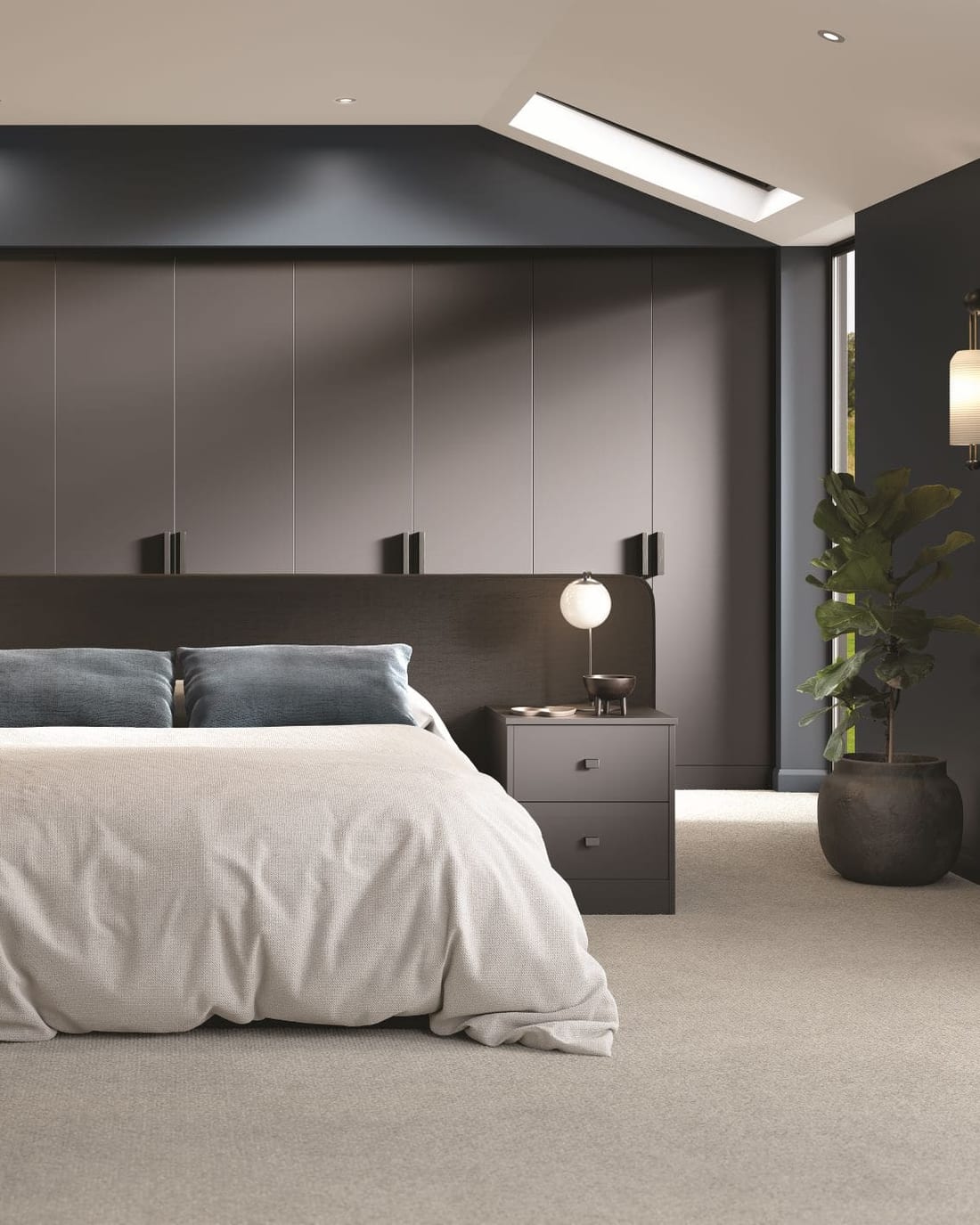
There is now exactly one set of UK figures for what a bespoke fitted wardrobe costs with its method printed beside it. Which? published them on 10 August 2026, from an online survey of nine Which? Trusted Traders carried out in November 2025. Nine is a small number, and this piece is going to keep saying so. It is also the only figure of its kind anybody has published with the workings attached.
The headline: a three-door bespoke wardrobe, professionally installed, came in at £2,900 for standard quality and £3,900 for high quality. Four doors, £4,900 and £6,200. Prices include VAT and are rounded to the nearest £100.
The headline numbers
three-door bespoke, standard quality, fitted
the same wardrobe in high quality
the spread across three-door quotes
installers surveyed, November 2025
What that price is actually for
One line in the method does more work than any of the figures: “Our prices are for a straight-run fitted wardrobe with swing doors.”
A straight run means a flat wall, square corners and nothing to work around. Swing doors means hinges rather than a track. That is close to the simplest fitted wardrobe that can be built, and it is not what most people arrive holding a picture of.
The spread says the same thing from the other direction. Across the quotes collected, three-door wardrobes ran from £1,500 to £7,000, and four-door from £3,900 to £10,000. Nearly fivefold, for a category described in four words. The median is the least interesting number on the page. The range is where the information is.
Most of the gap is fitting, not cabinetry
The same exercise priced flat-pack modular wardrobes at £500 for a standard three-door and £600 for four. It then priced modular furniture *with* professional installation at £2,900 and £4,900 — the same numbers as standard-quality bespoke.
Those figures do not reconcile neatly with the installation-only prices on the same page, which start from roughly £1,000 for three doors and £1,500 for four, and come from three traders rather than nine. So take the match as a signal rather than a sum. The signal is still worth having: once somebody is fitting the thing properly, the cost of the boxes stops being what decides the bill.
The published price is for the one wardrobe almost nobody orders: a flat wall, square corners, and doors on hinges.
What moves a real room past the straight run
Six drivers are named: size and dimensions, materials and finishes, internal configuration and accessories, door style and hardware, installation complexity, and brand and service level. Two of them do most of the work in practice.
On doors: “Sliding doors are typically more expensive than hinged doors because of the track systems required.” Sliders get asked for to save floor space, and are widely assumed to be the cheaper option. They are not.
On the room itself: spaces with “awkward shapes, sloped ceilings, uneven floors or obstacles such as radiators” need “more labour time and custom solutions”.
That second one is where a national figure and a Cheshire quote part company. In housing of almost any age, the awkward conditions are the normal case rather than the exception — chimney breasts, walls that are not plumb top to bottom, coombed ceilings in anything with rooms in the roof. A straight run with swing doors is the price of all that being absent.
What we’d take from it
First, if a budget started from a flat-pack price, the gap is not a markup. It is a different product, and most of the difference is somebody fitting it to a wall rather than to a diagram.
Second, the question worth putting to any supplier is not the price but what the price covers — carcass, doors, the interior, scribing to wall and ceiling, making good and decorating afterwards. Two quotes £3,000 apart are often two different scopes wearing the same word.
Third, and this one cuts against us: on resale the source is blunt. “Overall, if you’re renovating to sell, it probably isn’t worth adding fitted wardrobes.” Knight Frank’s Christopher Burton takes the other side — “Fitted wardrobes are often worth adding” — and both are printed without a verdict. If the reason for doing this is to add value before a sale, the evidence is genuinely mixed. If the reason is that you have to live with the room, that is a different question and a better one.
And the caveat that belongs on every number above: nine installers, surveyed nationally, all of them drawn from one vetted scheme. That is not a market median and should never be quoted as one. It is a sanity check — enough to tell you whether a quote is in the right range, not enough to tell you whether it is the right quote.