
Journal · Industry data
Bedrooms go dark, and traditional
Houzz’s 2026 search data shows a 4x rise in ‘traditional bedrooms’ and black bedrooms up 79%. For fitted furniture, that raises the fifteen-year question: which parts of a dark, period-leaning scheme belong in the joinery, and which belong in the paint tin.
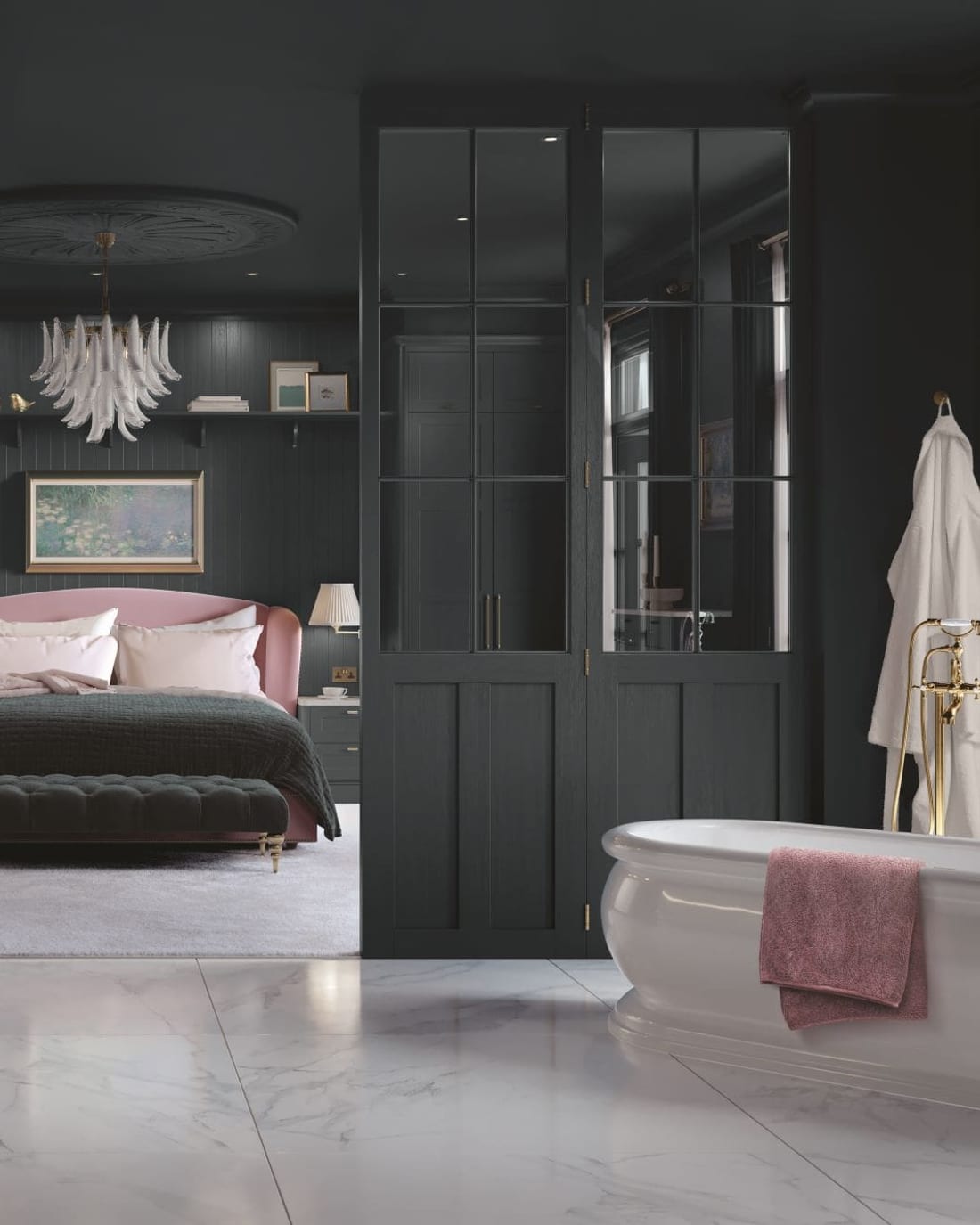
The 2026 Houzz UK Emerging Trends Report, published in June, measures what people are actually searching for on the platform — UK searches from January to March this year against the same three months last year. The bedroom findings point one way. Searches for ‘traditional bedrooms’ are up 4x. ‘Black bedroom’ is up 79%, ‘dark green bedrooms’ 46%, ‘dark ceilings’ 126%, ‘dark wood’ 74%. After a decade of pale, grey-on-grey bedrooms, taste is swinging towards dark, enveloping, period-leaning rooms — and swinging hard.
One caution before anything else: these are search-interest figures, not sales. They measure what people are looking at, not what they are buying. But for anyone commissioning fitted bedroom furniture — where the finish and door style are chosen once and lived with for fifteen years — where taste is heading matters more than where it currently sits.
The headline numbers
rise in searches for ‘traditional bedrooms’
searches for ‘black bedroom’
searches for ‘dark ceilings’
searches for ‘dark wood’
The dark palette, by search growth
Year-on-year growth in UK searches on Houzz, January–March 2026 vs January–March 2025
| Dark ceilings | 126% | |
|---|---|---|
| Black bedroom | 79% | |
| Dark wood | 74% | |
| Dark green bedrooms | 46% |
Values are growth in search interest, not shares of projects — a small term can grow fast. ‘Traditional bedrooms’ (up 4x) and ‘moody living rooms’ and ‘forest green’ (both more than doubled) are excluded because Houzz reports them as multiples, not percentages. Source: 2026 Houzz UK Emerging Trends Report.
Two trends, one room
Houzz files these findings under two separate headings, and it is worth keeping them separate. The dark palette — black, deep green, dark ceilings, dark timber — is about atmosphere; the report describes designers using deep colour to create an enveloping, cocoon-like effect. The traditional turn is about architecture: homeowners of period properties leaning into them rather than plastering over them, with ‘Victorian extensions’ up 130% in the same data. In a bedroom the two meet naturally. A panelled wardrobe front in a deep colour is simultaneously both trends — which is probably why the bedroom is where this shows up first.
For Cheshire housing stock, the traditional half is the interesting one. A large share of the houses we fit were built between 1850 and 1939, and for years the default has been to put deliberately plain, frameless furniture into rooms with cornices and sash windows. A 4x rise in people searching for the opposite suggests the framed, panelled wardrobe — proportioned to the room’s existing lines — is coming back into the mainstream.
A panelled wardrobe front in a deep colour is both of this year’s bedroom trends in a single piece of joinery.
What lasts, and what is paint
The fifteen-year question is which parts of this to commit to in fixed furniture. Some of it is structural and ages well: a framed, panelled door style; a dark timber veneer with real figure; furniture built to the ceiling line of a period room. These read as design, not fashion, because they were design long before this data. Other parts are honestly paint — the black wall, the dark ceiling — and their advantage is that they cost a weekend to reverse. A sensible dark bedroom puts the permanent money into proportion and material, and lets the paint tin carry the riskiest part of the palette.
Dark rooms also change the engineering. Deep colours swallow light, so a dark fitted bedroom needs its lighting designed rather than inherited — inside the wardrobes as much as outside, where a dark interior can make a full rail unreadable at seven on a December morning. And a painted dark finish shows handling in a way a mid-tone never does, which is an argument for door styles and finishes chosen with use in mind, not just the mood board.
What we’d take from it
Three things. First, if you are drawn to the dark bedroom, decide where the darkness lives: commit the joinery to the parts that were good design before the trend — panelled fronts, honest timber, full-height proportion — and keep the boldest colour where it can be repainted. Second, if you own a period house, the data says the market has stopped apologising for period rooms; furniture that answers the architecture is now the direction of taste, not a niche. Third, the caveat we started with: this is search data from one platform over three months, and it measures curiosity, not commissions. It is a genuinely useful early signal — the same report picked up the storage and wellness shifts we now see daily — but a bedroom should outlast every dataset in this article. Build for the room, not the graph.