
Journal · Colour
Green either way
Dulux named Soulful Sage its Colour of the Year 2027 on 8 September — a soft, silvery, light green. Three weeks earlier we wrote up UK search data showing bedrooms going dark. Both are right about the hue. Only one of them is measuring anything.
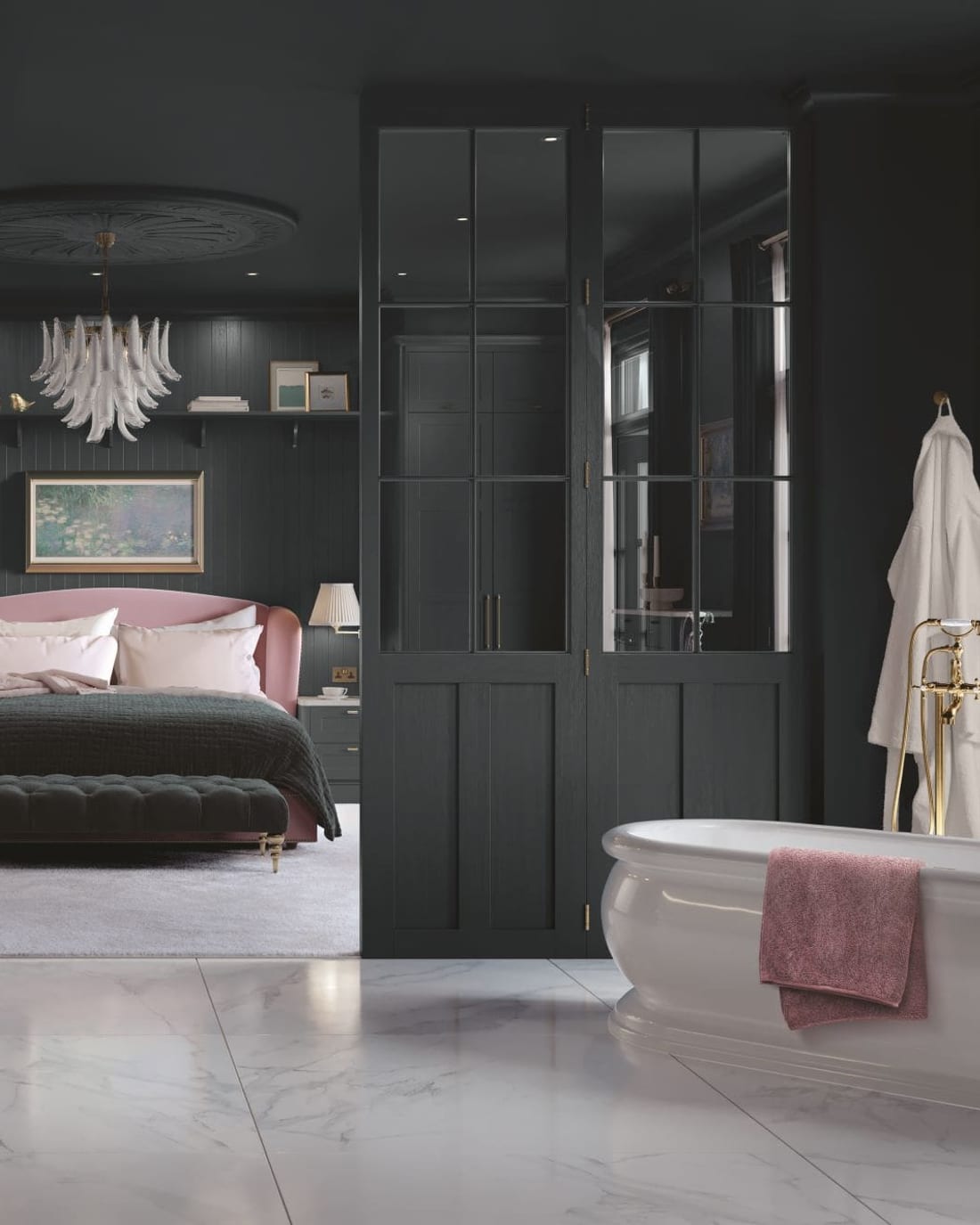
On 8 September 2026 AkzoNobel announced its 2027 Colour of the Year: Soulful Sage, which its own release describes as "an ethereal, soft and silvery green". In the UK it arrives under the Dulux name. The reasoning, from Heleen van Gent, Creative Director of AkzoNobel's Global Aesthetic Center: "Our 2027 Color of the Year is all about creating lighter spaces for a lighter life… Many people are feeling weighed down by world events and overloaded with information."
Three weeks before that, we published a piece on UK bedrooms going dark — searches for black bedrooms up 79%, dark ceilings up 126%. So here are two credible-sounding accounts of 2027 pointing in opposite directions, and a reasonable person about to choose a wardrobe colour might want to know which to believe. The answer is that they are not the same kind of claim, and only one of them counted anything.
The headline numbers
of renovated kitchens chose green cabinets
growth in searches for dark green bedrooms
colour stories: Glow, Light and Lift
sample size published behind the forecast
What a colour of the year actually is
AkzoNobel is unusually open about its method, and it is worth reading closely. "Its annual ColourFutures trend forecast meeting brings together in-house experts, international architects, designers and journalists to share insights into how our reactions to the world around us impact our color choices." That is a curated expert panel producing a considered view. It is not a survey. There is no sample size, no fieldwork window, and no measurement of what anybody bought or intends to buy.
That is not a criticism, and a forecast is a legitimate thing to publish. Colour forecasting is a real discipline with a long record, and paint companies have to decide what to manufacture eighteen months out, so somebody has to make the call. The release is also explicit that the palettes span aerospace, automotive, consumer electronics, cabinetry, flooring and architecture — a global programme aimed at many industries, not a reading of the British domestic market.
A colour of the year is a decision a company has made, announced with conviction. It is not a description of what anyone is doing.
The measured picture, for comparison
Houzz's 2026 UK Kitchen Trends Study, published on 27 January 2026, asked more than 400 UK homeowners about kitchens they had recently renovated or were planning. Blue leads cabinet colour at 18%, green sits second at 17%, and grey — the default of the last decade — has fallen to 12%.
Cabinet colours in renovated UK kitchens
Share of homeowners renovating a kitchen, 2026 study
| Blue | 18% | |
|---|---|---|
| Green | 17% | |
| Grey | 12% | |
| Off-white | 9% | |
| Wood tones | 9% |
Shares do not total 100%: the study reports only the leading colours. These are kitchen cabinet finishes, not wall paint, and the figures were published in January 2026 — a year before the 2027 forecast they are set against here. Source: 2026 UK Houzz Kitchen Trends Study, more than 400 UK homeowners.
Set the two together and the disagreement narrows to one thing. On hue, everything agrees: green. It is second in kitchens at 17%. In the 2026 Houzz UK Emerging Trends Report, published 3 June 2026, searches for "forest green" more than doubled year on year and "dark green bedrooms" rose 46%. And now a paint company has put a green at the centre of its 2027 collection. Four separate signals, one colour family.
On value — how light or dark that green should be — they part company completely. Dulux forecasts silvery and pale. The UK search data our own August piece was built on describes people looking for the deepest end of the same hue. Both can be true at once; they are measuring different things at different moments, and one of them is a prediction about next year while the other is a record of last spring.
Which half of the room to bet on
For fitted furniture this distinction has a price attached. A wall colour is a weekend and forty pounds. A run of wardrobe doors or a kitchen in a sprayed finish is a fifteen-year decision, and repainting fitted joinery well is a job, not an afternoon. So the useful question is never "what is the colour of 2027" — it is which surfaces should carry the risk.
The honest split is that hue is the durable part and value is the fashionable part. Green in cabinetry is now a mainstream choice supported by measured behaviour, not a brave one — it has been building since well before this announcement. How dark to take it is where taste is currently moving fastest in both directions at once, which is exactly the kind of decision to keep on the walls where it can be undone.
What we'd take from it
Three things, from a Cheshire workshop's point of view. First, a colour of the year is useful as a signal of where a large and well-informed organisation thinks the mood is going, and useless as evidence of what people are buying — treat it as the former and you will get value from it. Second, if you like sage, the good news is that you did not need the announcement: green cabinetry is already second in a national study and has been climbing for two years. Third, the practical rule stands whichever way the trend runs — commit the joinery to proportion, material and a hue with some history behind it, and let the paint tin carry the part you might change your mind about.
Two caveats worth stating plainly. There is a trap circulating on this one: a separate "Dulux 2027 Colour Forecast" with palettes named Play, Treasure and Sensory is published by DuluxGroup in Australia, a different company from AkzoNobel's Dulux in the UK. It is not the Colour of the Year and it is not a UK source. And the comparison in this piece is imperfect by construction — a 2027 forecast set against a January 2026 study and June 2026 search data, because no UK study of what people chose in 2027 can exist yet. That is the nature of the thing. It is also the reason a forecast is worth reading and not worth obeying.