
Journal · Housing data
Seven per cent were selling
Nationwide put its house price data to the question every renovator asks, and found it could not answer the kitchen and bathroom part of it. What it could measure turns out to be more useful than the answer people wanted.
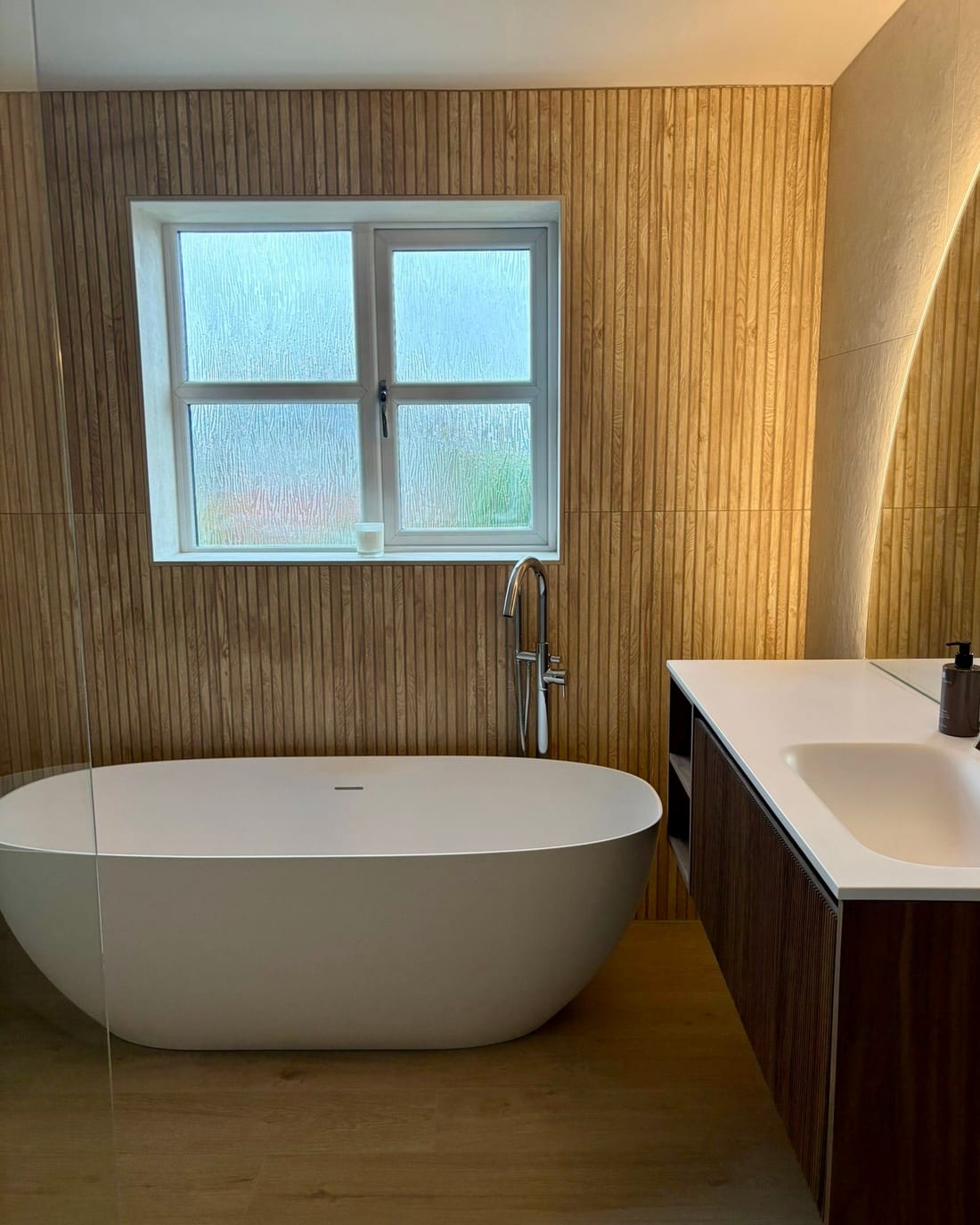
Ask the internet whether a new kitchen adds value to your house and you will get a number. Ten per cent is the usual one. It has no source. Last October, Nationwide ran the question against its own house price data — the longest-running dataset on what actually moves UK property prices — and published the honest result: “While we can’t identify the value associated with kitchen and bathroom renovations, we are able to explore the impact of more substantial projects, particularly those which increase the size of the property.” The organisation best placed to produce that percentage went looking for it and said it could not find it.
The headline numbers
renovated a kitchen, a bathroom, or both
added to price by a 10% increase in floor space
were renovating in preparation for a sale
regretted having the work done
Two separate pieces of research sit inside that report and they are worth keeping apart. The value figures come from Nationwide’s own sample for October 2024 to September 2025, correlating price paid against property type, age, floor area, bedrooms, bathrooms, region and locality. The behavioural figures come from a Censuswide survey of 2,000 homeowners, 1,285 of whom had renovated in the previous five years, fielded over two days in early October 2025.
What the data can measure is space
Strip out what Nationwide cannot see and a clear finding remains. A 10% increase in floor space, all things equal, adds 5% to the price of a typical house. More precisely, it is bedrooms that carry it. Adding space to create an additional double bedroom adds 13% to a two-bedroom house, and a loft conversion or extension containing a large double bedroom and a bathroom can add as much as 24% to a three-bed, one-bathroom house.
Value added by adding a bedroom
Nationwide HPI analysis, sample period October 2024 to September 2025
| Detached, 2 to 3 bed | 17% | |
|---|---|---|
| Semi-detached, 2 to 3 bed | 14% | |
| Terraced, 2 to 3 bed | 13% | |
| Detached, 3 to 4 bed | 13% | |
| Semi-detached, 3 to 4 bed | 10% | |
| Terraced, 3 to 4 bed | 10% |
Every figure assumes the bedroom is created by adding floor area — 13m² for a single extra bedroom. These are returns on new space, not on fitting out a room that already exists.
That distinction is the one to hold on to. Every figure in that table is a return on new floor area. Fitting out a bedroom you already have with a run of wardrobes adds no square metres, and nothing in this dataset says what it does to the price. The same goes for replacing a kitchen inside the footprint of the old one, however much better the result.
One room-level finding is worth pulling out. Among homeowners aged 55 and over who had made improvements, bathroom renovation was the most popular choice at 68%, comfortably ahead of anything else that group did. Across all ages, 42% added a bathroom or an ensuite and 25% added an additional toilet. Adding a bathroom is not the same as replacing one — the first changes what the house is, and it is the version that appears in the 24% figure above.
Why the resale question is the wrong one
The survey answers something the value analysis cannot: what people are actually doing this for. Fifty-four per cent renovated to make the property look nicer. Thirty-five per cent to boost its value. Thirty-two per cent to modernise it enough to live in, and 26% for more space. Just 7% were renovating in preparation for a sale.
Only one homeowner in fourteen is renovating for a buyer. The rest are buying the years they will spend in the room.
What we’d take from it
Three things, from a Cheshire workshop. First, if anyone quotes you a percentage that a new kitchen will add, ask where it came from — Nationwide held the data to produce that figure and said it could not. Second, if adding value genuinely is the objective, the evidence points at floor area and bedrooms, which means an extension or a loft conversion rather than a refit. Third, and most usefully, the average spend across everyone who renovated in the last five years was around £52,000, and only 4% regretted the work. Of those who did, 41% said the costs were too much, or the end result was not what they wanted, or both.
That last figure is the one worth designing against. Regret in this data has nothing to do with resale — nobody in it reports wishing they had made more on the sale. It is about spending more than expected, or getting something other than what was in your head. Both are settled long before anything is fitted, in the drawings and the specification.
The caveats, plainly. The survey is self-reported and covers all renovation work rather than bespoke commissions specifically, and its £52,000 is five years of cumulative spend across every job, not the price of one room. Nationwide’s value analysis is a correlation across property characteristics, not a controlled study of what a renovation returns. It tells you what buyers pay more for. It does not tell you what your kitchen will fetch.