
Journal · Standards
Three of forty
Forty companies hold FIRA Gold certification. Three of them hold anything to do with bedrooms. That gap says something useful about how fitted bedroom furniture is assessed in this country — and about the two British Standards worth naming when you next talk to a supplier.
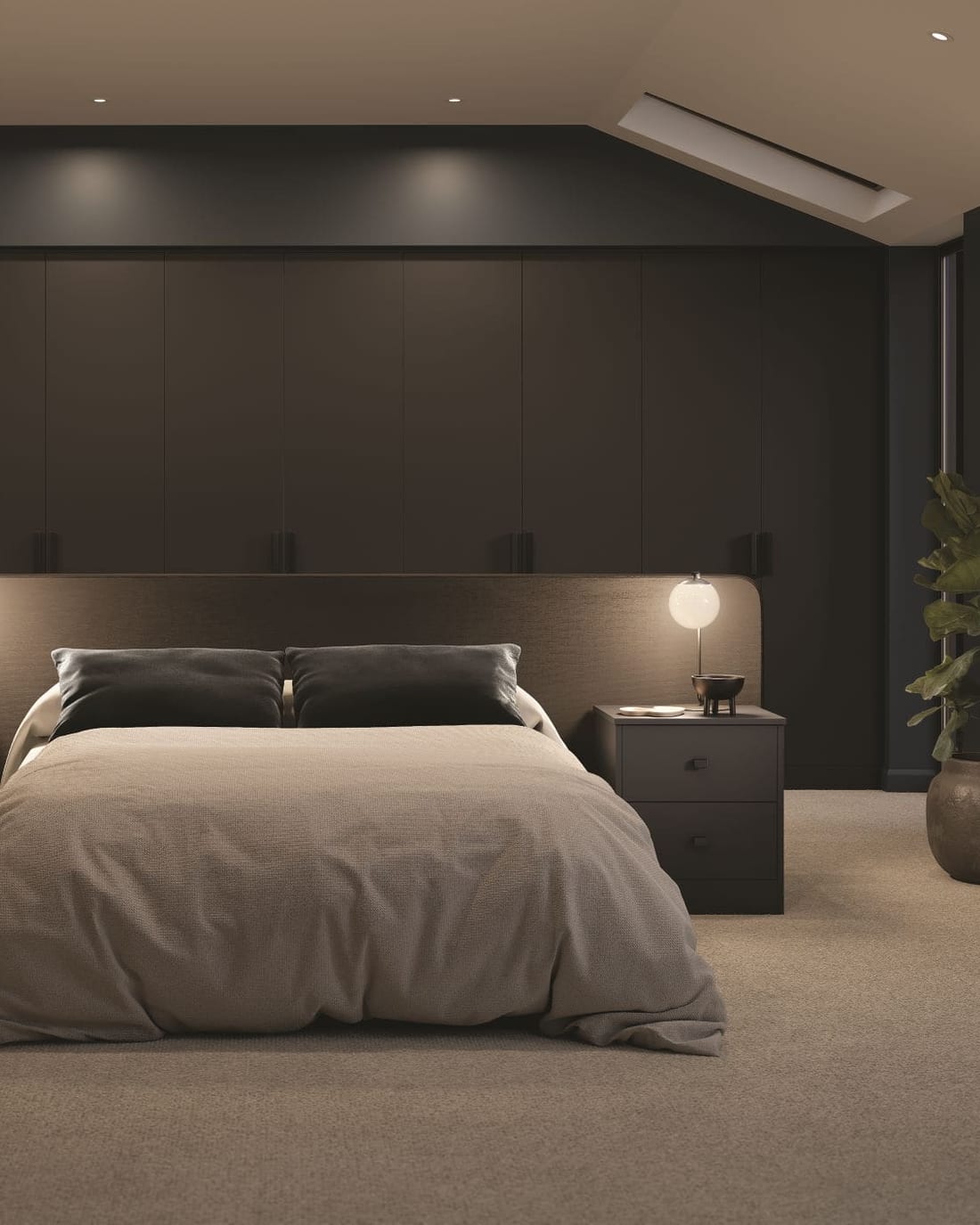
The FIRA Gold certification holders list is public, and on 19 August 2026 it named forty companies. Read down it and the pattern is hard to miss: kitchen after kitchen, worktop after worktop, upholstery fillings, cabinet components. Three of the forty carry a certificate with the word bedroom in it. Two are Wren entities, holding between them the only two FIRA Gold installation certificates for fitted bedroom furniture in the country. The third, BA Components, supplies doors and panels rather than fitting anything.
Be careful what that means. It is not evidence that fitted bedrooms are badly made, nor a criticism of the firms that certified kitchens instead — certification is voluntary, it costs money, and companies buy it where customers ask for it. What the list shows is that in kitchens the assurance infrastructure is mature and in bedrooms it barely exists. If you are commissioning a run of wardrobes, there is no widely held badge to look for. You have to ask better questions instead.
The headline facts
companies on the FIRA Gold holders list, read 19 August 2026
of them holding any bedroom-related certificate
British Standards a domestic wardrobe is normally tested against
the BS 4875-7 severity applied to bedroom furniture — dining furniture gets level 3
Two standards, and neither does the whole job
FIRA International is UKAS accredited to test wardrobes and publishes what it tests them to. Two matter for domestic storage. BS EN 14749 covers safety — stability, and the strength of wall attachments. BS 4875-7 covers strength and durability: whether the carcass holds up and whether doors and drawer runners survive being used.
They are deliberately partial. As the test house SATRA explains, BS 4875-7 contains no stability tests despite its title, which is why EN 14749 runs alongside it. Neither covers fire. Neither covers the durability of a surface finish — so nothing in either tells you whether a painted door will still look right in ten years, which for most people is the actual worry.
Bedroom furniture is tested less hard than your dining table
This is the detail worth carrying into a showroom. BS 4875-7 has no single pass mark. It sets five levels of testing severity by intended use, and SATRA gives the worked example: levels 1, 2 and 3 mean “delicate”, “careful domestic” and “general domestic”, with bedroom furniture at level 2 and dining room furniture at level 3.
There is a logic to it — a wardrobe door gets opened twice a day by an adult, a dining chair gets sat on by whoever turns up. But a fitted bedroom in a family house is not reliably a careful-domestic environment, and a dressing room with drawers hauled open every morning is closer to general domestic in practice. The useful consequence: “tested to BS 4875-7” is an incomplete answer. The complete question is tested to which level.
The wall is not in the test
FIRA is blunt about why stability matters: storage products can cause serious injury if they topple, so stability and the suitability of wall fixings are key safety tests. SATRA is blunter still, noting that children across Europe and the USA have died climbing wardrobes and large chests. Tall storage either resists toppling by design or gets fastened to the wall, and EN 14749 tests the strength of those wall attachments.
But read the standard’s scope and you find the boundary. Safety that depends on the structure of the building sits outside it: for a wall-hung unit, the test covers the cabinet and its attachment devices and stops there. The wall itself is not assessed. For freestanding furniture that is a footnote. For fitted furniture, attached by definition to somebody’s actual wall, it is the whole game — and the part no certificate can travel with.
A fitted wardrobe is only ever as stable as the wall behind it, and the standard stops at the bracket.
Which is an argument for surveying the substrate rather than assuming it. Dot-and-dab plasterboard, a stud wall of unknown centres, lath and plaster in an old Cheshire farmhouse, a modern blockwork inner leaf — four different fixing problems. The furniture can be identical in all four; the installation cannot.
The label that disappeared last October
One myth is worth correcting precisely, because pages get it wrong in both directions. The Furniture and Furnishings (Fire) (Safety) Regulations 1988 do not blanket-cover fitted bedroom furniture. The duties attach to filling materials, upholstery composites and covers: fillings must meet ignition requirements, composites must be cigarette resistant, covers must be match resistant, and a permanent label must be fitted to every item bar mattresses and bed-bases. A plain carcass with doors and shelving has none of those three things, so none of the duties bite on it.
The moment a scheme includes an upholstered headboard, a padded ottoman or window-seat bench, or a dressing stool, those items are squarely in scope and must carry the permanent label. So the honest version is neither “fitted wardrobes must comply with the fire regulations” nor “the fire regulations don’t apply to bedrooms”. It depends on which parts of the room are upholstered.
There is also a recent change that a lot of published guidance has not caught up with. The 1988 Regulations were amended by the Furniture and Furnishings (Fire) (Safety) (Amendment) Regulations 2025, in force on 30 October 2025, which removed the requirement for a display label — the swing ticket — at the point of sale and in the second-hand market. The permanent label stays. If you read a page that still tells you to check for a display label on an upholstered item, that page is out of date.
What we’d take from it
The absence of a badge here is not a reason to shrug. It moves the burden onto specifics, and specifics are answerable. Ask which standards the carcass and moving parts were tested to, and at which BS 4875-7 severity level. Ask what the fixings go into, and whether anyone opened up the wall to find out before the drawings were signed off. Ask about what no standard covers — the finish, and what happens if a door needs matching in year eight. A supplier who can answer those without reaching for a brochure is telling you more than a certificate would.
The honest caveat: the holders list is a snapshot and it moves, so forty is true on the day we read it and not a permanent fact. FIRA Gold is one scheme among several routes a maker can take, and plenty of good workshops hold nothing at all — including plenty who would pass comfortably if they applied. Absence of certification is not evidence of poor work. It only means that in fitted bedrooms, unlike kitchens, the questions have to do the work the badge does elsewhere.