
Journal · Industry data
The most common kitchen regret is the floor
Which? asked 415 members what they would change about their kitchens. Nothing on the list scored above 4% — and almost every item was decided at drawing stage rather than chosen from a brochure.
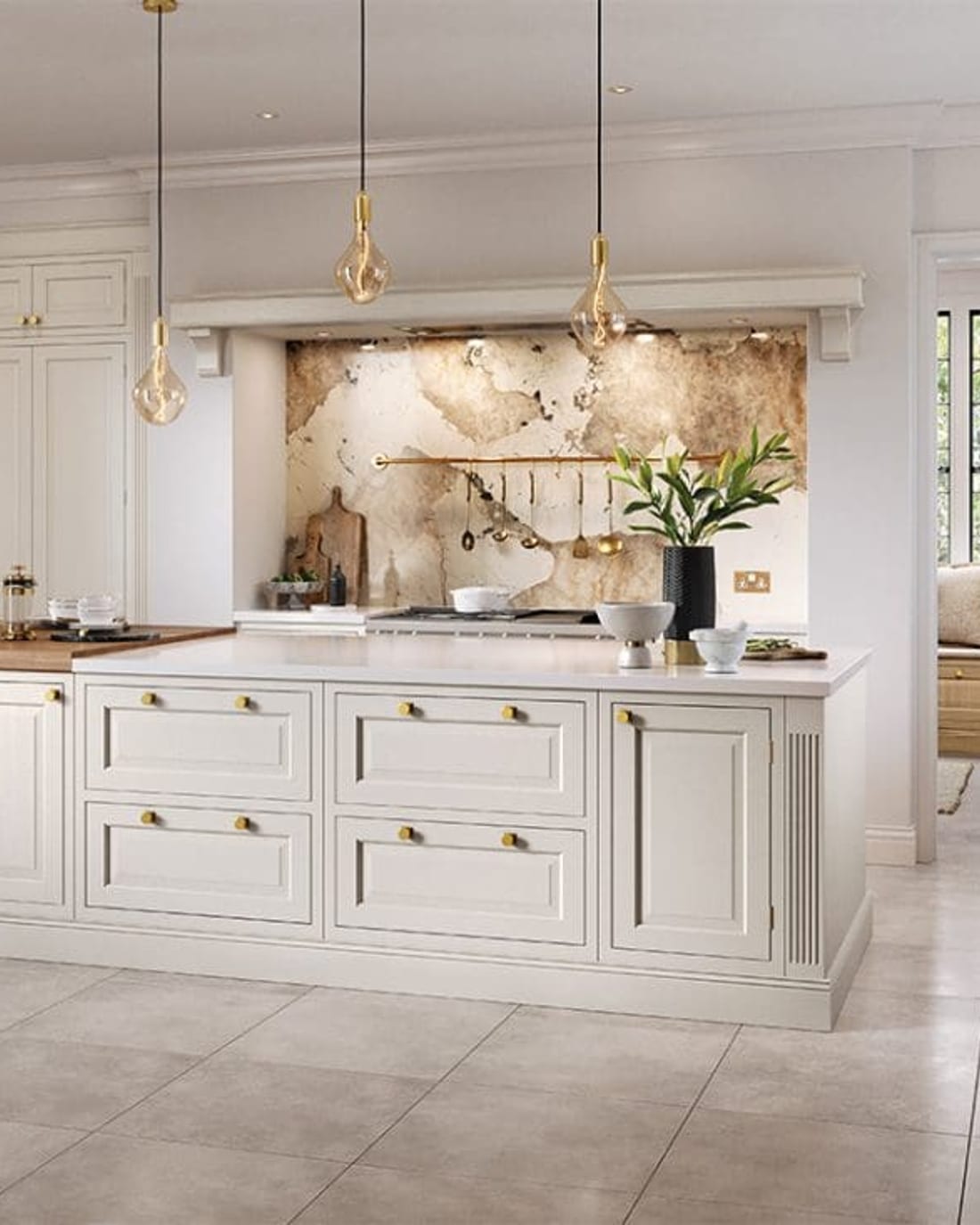
Which? published its latest kitchen regrets survey on 26 April 2026 — 415 members, surveyed in September 2025, asked what they would do differently. The most common answer is not the brand, the worktop or the cabinets. It is the floor.
Two things are worth saying before the list. The first is that regret is uncommon: no single item was named by more than 4% of respondents, and most sat at 2% or 3%. The second is that this is a sample of 415, which is small, and Which? members skew older and more affluent than the country at large — closer to the household that commissions bespoke work than a national average is, but still not a market reading. What follows is a ranking with a handful of percentages attached, not a measurement.
The headline numbers
too few cupboards and drawers — the highest figure published
layout, sockets, appliances and cabinet choice, each
lighting design
Which? members surveyed, September 2025
Which? publishes no percentage for flooring or for worktop space — only their position in the order. So the floor is first by rank, and we are not going to invent a number for it.
The floor is the part nobody plans
What members described is specific and avoidable. One reported vinyl planks with an embossed grain effect "into which dirt becomes ingrained", adding that "the only way to shift it is by scrubbing with a brush by hand". Respondents with very dark or very light floors said they showed dirt readily, particularly around the sink and the cooker where splashes land. Others named creaking boards, a lack of soundproofing, and tiled floors that break whatever gets dropped on them. Which? adds a point that rarely reaches a brochure: tiles are durable, and they are also noticeably colder underfoot than wood or laminate.
None of that is surprising from where we stand. The floor is usually the last line on the quote, frequently a different trade, and often chosen late from a sample the size of a postcard once the budget is tired. It is also the one surface in the room that everything else sits on. Changing it afterwards means lifting plinths at best and taking units out at worst, which is why a decision made in ten minutes at the end can outlast every other choice in the room.
Storage, sockets and lighting are all drawing-stage decisions
Storage is second, and carries the only figure above 3%: 4% wished they had more cupboards and drawers. It was also the second-most-common complaint when Which? ran the same survey in November 2023 with 1,108 members, which makes it the one regret that has not moved. The detail is more useful than the percentage. "The current fashion for large, deep drawers rather than cupboards with a slim drawer above has left me a bit short of storage for cooking utensils," one member said. "I should have included another concealed cutlery drawer." That is not a storage shortage. That is a granularity shortage, and it is designed in or it is not.
Sockets sit at 3%, with the most quotable line in the survey behind them: "No matter how many sockets you think you need, you'll want more." Lighting is last at 2%, and the recurring complaint is precise — ceiling lights positioned so that whoever is working at the worktop stands in their own shadow. Which? makes the point that if an island is going in, the lighting above it wants deciding before it is installed, not after.
Layout accounts for another 3%, and the examples read like a list of things that look fine on a plan and fail in use: an island too big for the room, awkward seating round the table, the bin in the wrong place, appliances left unintegrated.
Not one of the seven is a complaint about craftsmanship. Every one of them is a decision taken before anything was built.
What changed since 2023
Worktop space was the most common regret in the 2023 survey. It is sixth now. Neither edition publishes a percentage for it, so that is a change in rank and nothing stronger — two different samples, two years apart, with no figures to compare. Why it moved is not in the survey and we would be careful about explaining it. The honest reading is that the complaint has not vanished; it has been overtaken.
The two appliance and cabinet findings are worth separating, because they point in opposite directions. Of the 3% unhappy with appliances, some named poor-quality brands and others had over-specified — one member's warming drawer goes unused, and several struggled with the height of a double-stack oven. The 3% unhappy with their cabinets named matt finishes that show fingerprints, finishes faded by direct sunlight, and hardware cheap enough to cheapen everything around it. That last one is the only item on the whole list that a maker can fix with a specification rather than a conversation.
What we'd take from it
Three things, from a Cheshire workshop's point of view. First, put the floor on the agenda at the first appointment rather than the last — it is the top regret in the survey and it is almost always treated as an afterthought. Second, count the sockets with the appliance list actually in front of you, then add more; nobody in this survey wanted fewer. Third, lighting over an island is designed, not fitted, and the shadow problem is the one fault that gets noticed every single evening.
The caveat matters as much as the findings. This is 415 people, the percentages are single digits, and five of the seven items carry a published figure while two carry only a rank. It is not evidence that 4% of British kitchens are short of drawers. What it is good for is a checklist: seven questions that cost nothing to ask at drawing stage and a great deal to answer afterwards. If it is useful alongside this, we have written separately on what a kitchen renovation actually involves.
The reassuring part is the part the headline buries. Asked what they regretted, most of these owners named nothing at all.